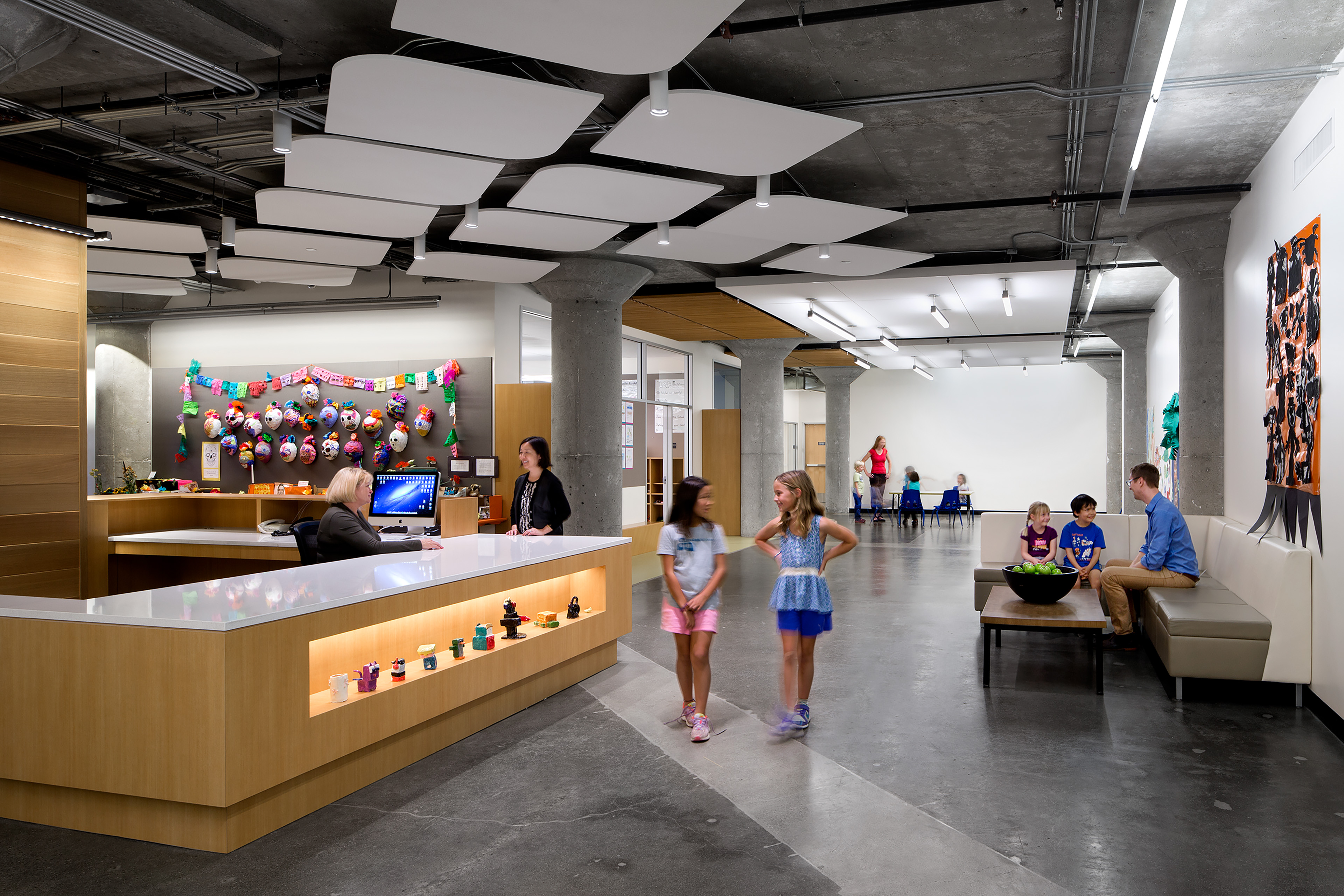
Where Ideas Take Shape
Back to Education
-
client
Town School for Boys -
location
San Francisco, CA -
size
2,690 SF
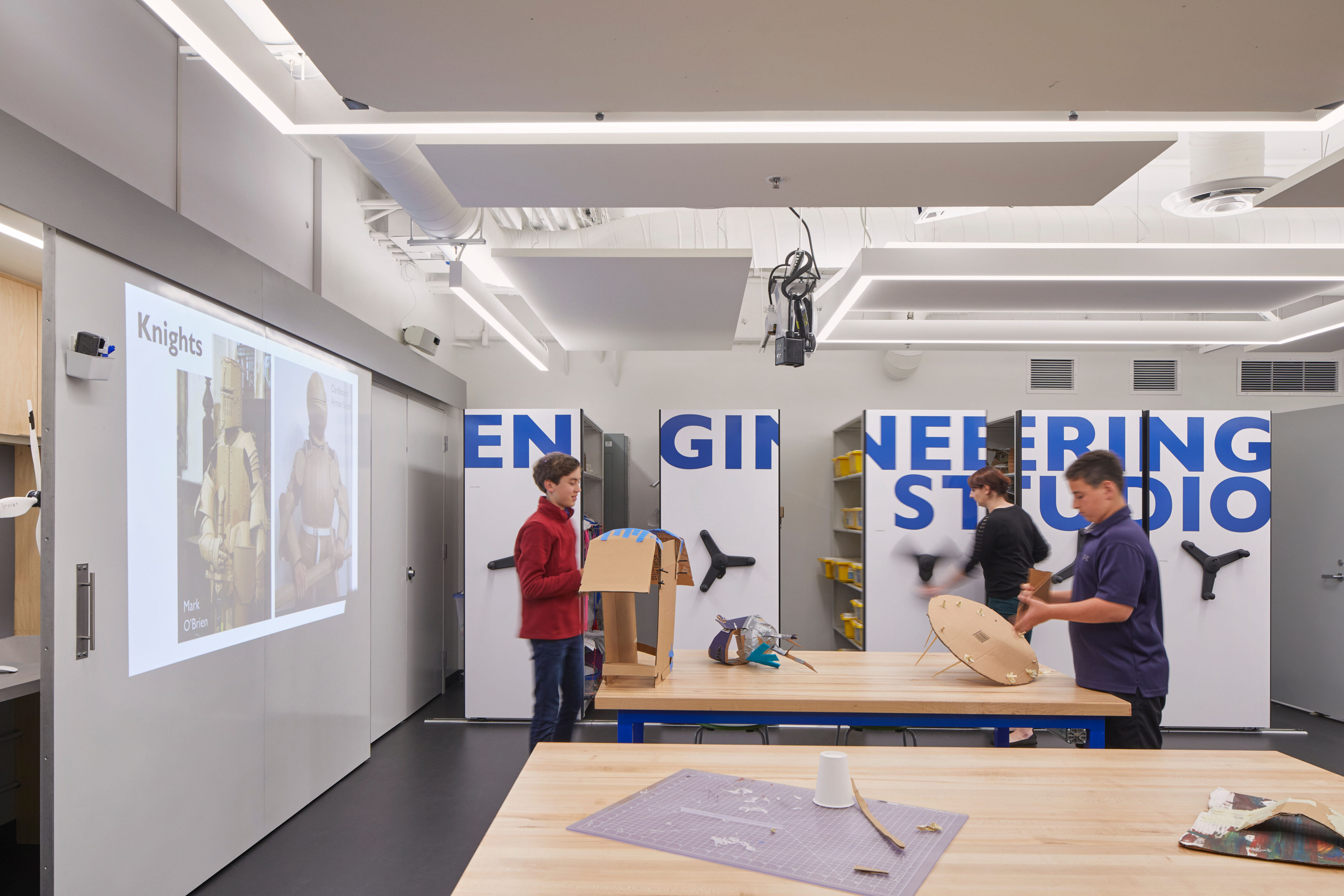
Two classrooms at Town School are transformed into a flexible Engineering Studio designed for hands-on exploration and creative problem-solving. Serving students from kindergarten through eighth grade, the space features mobile work surfaces, adaptable teaching tools, and advanced fabrication technologies that support collaboration, experimentation, and inclusive, future-focused learning.
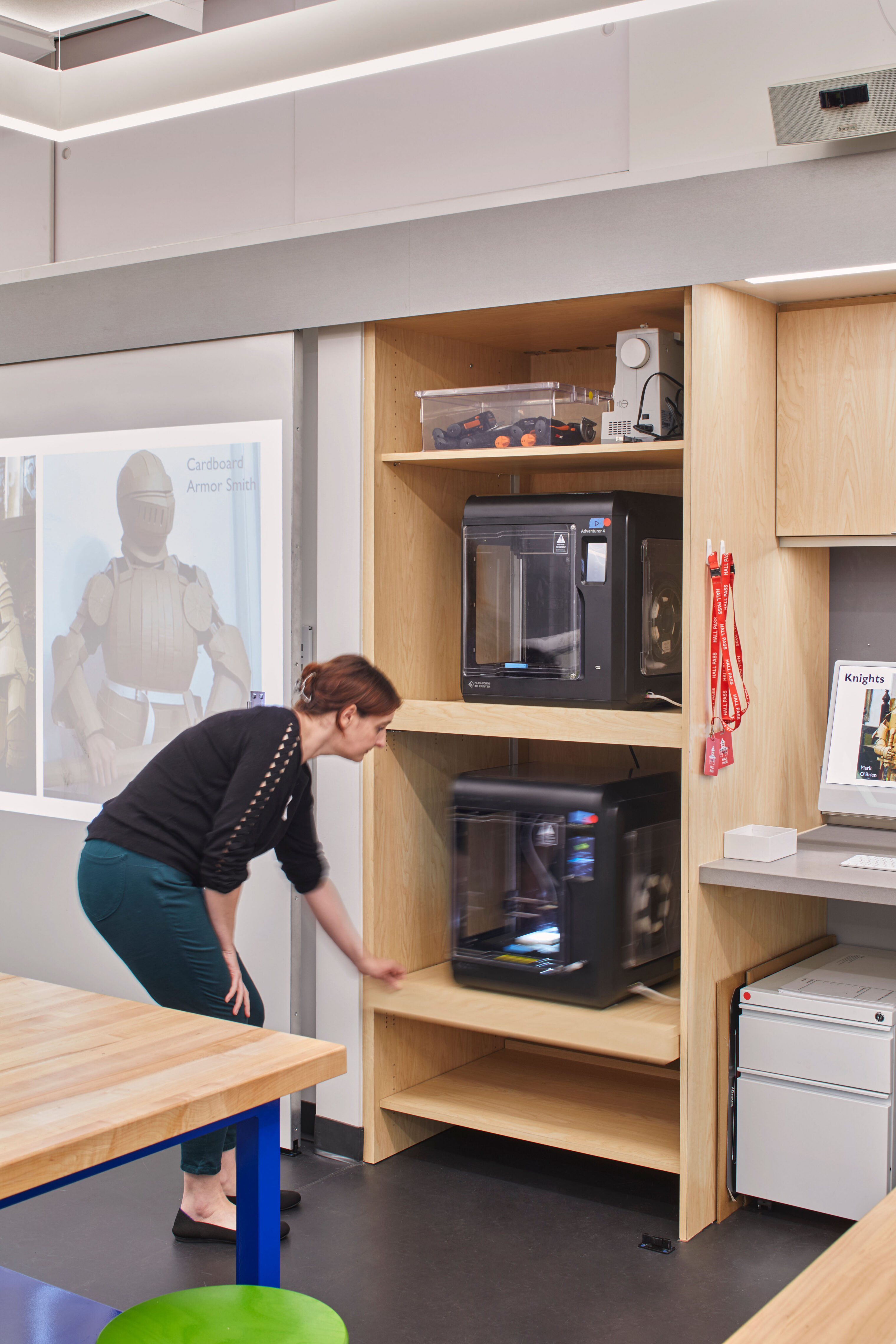
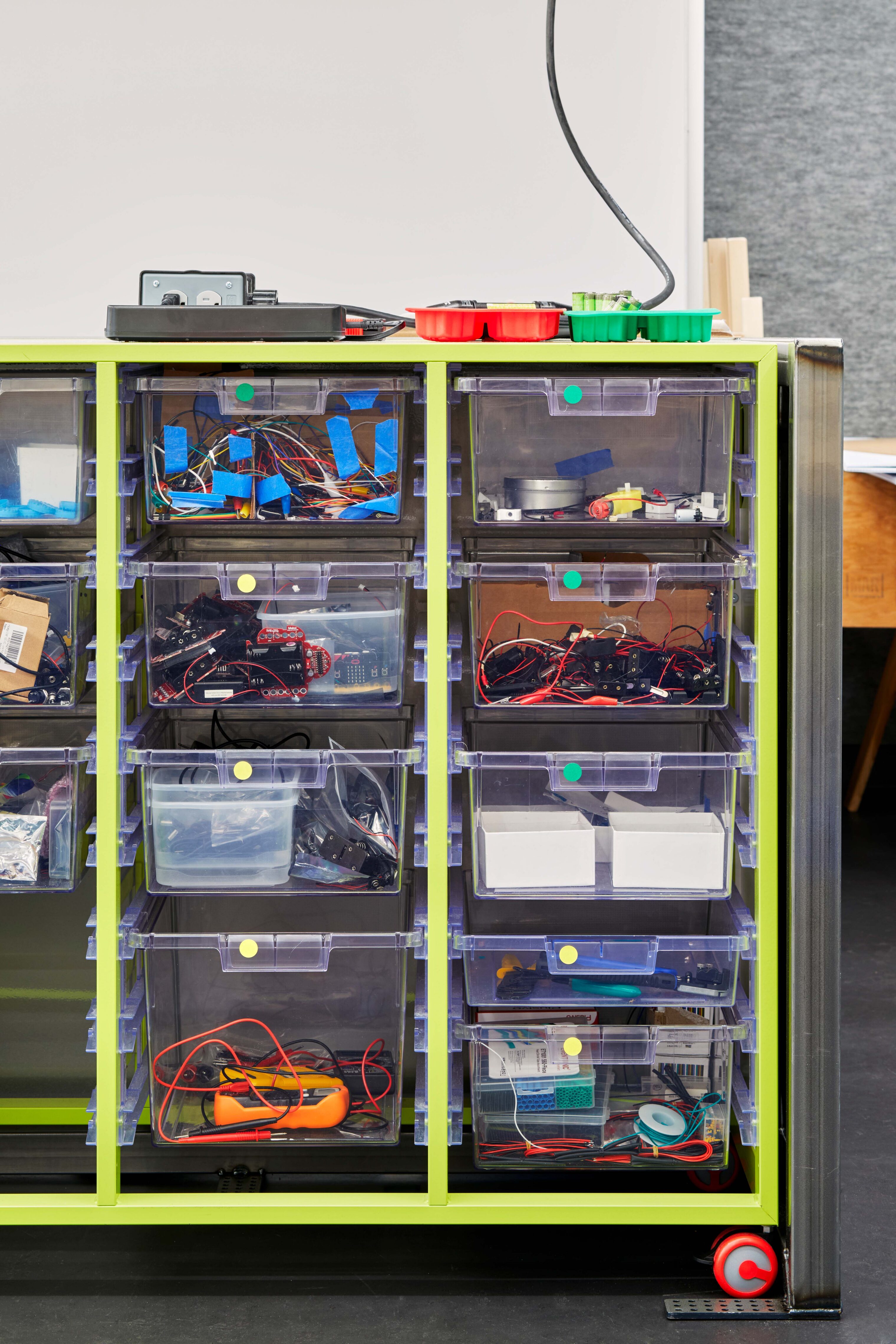
This modest renovation delivers big impact by combining two classrooms into a single, adaptable Engineering Studio that supports hands-on learning across grade levels. Height-adjustable and mobile work surfaces, sliding whiteboards, and ceiling-mounted robotics tables allow the space to transform as projects evolve. Fully equipped with tools for digital fabrication—including 3D printing, CNC milling, laser cutting, and electronics—the studio bridges abstract concepts and tangible experimentation, fostering curiosity, iteration, and real-world problem-solving while advancing Town School’s STEAM-focused, future-ready curriculum.
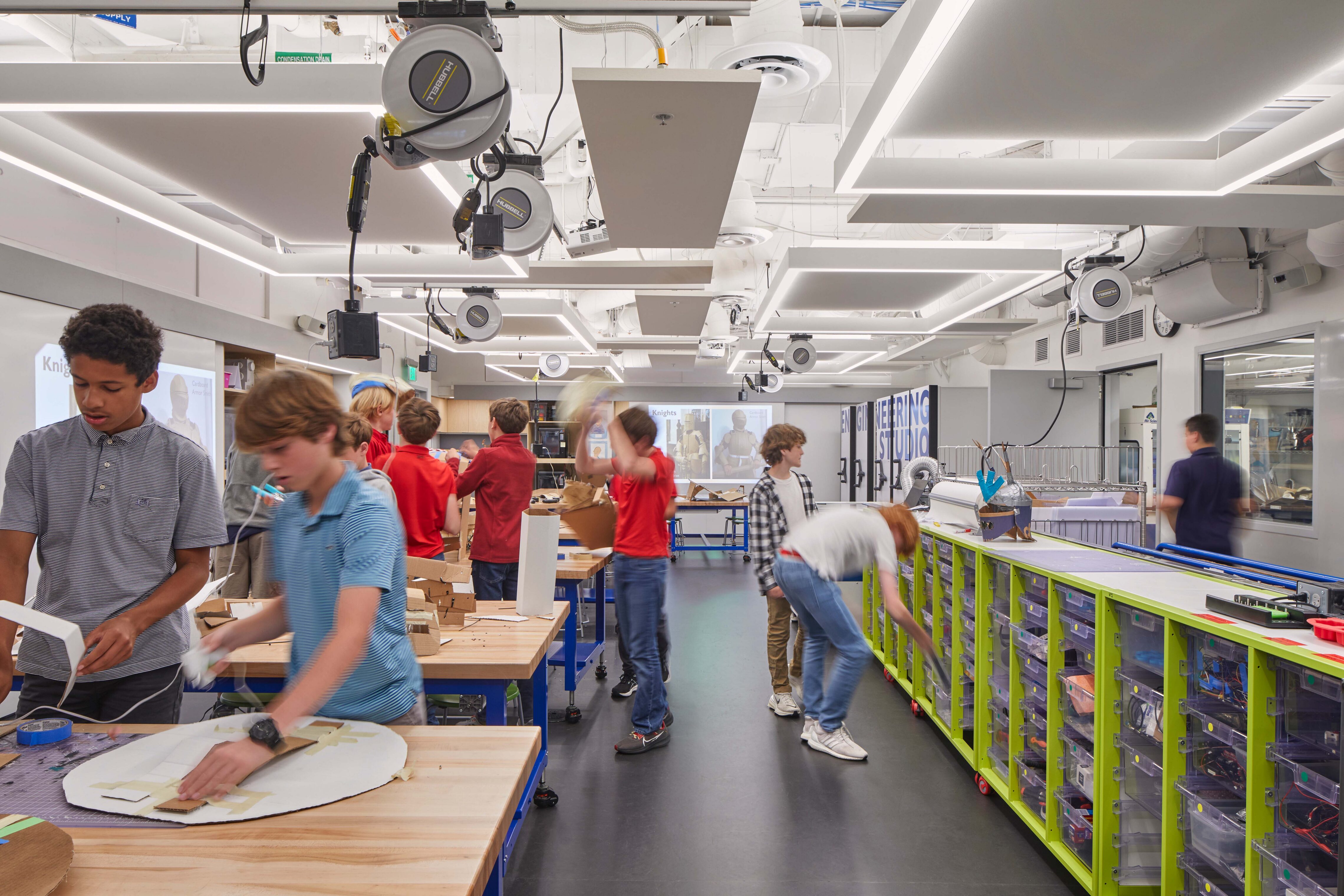
Designed for students ages five through fourteen, the Engineering Studio uses clear zoning strategies to balance safety, visibility, and flexibility within a compact footprint. Half-height partitions define areas for supervised tools and equipment while preserving open sightlines for faculty. Variable-height benches and adjustable furniture ensure accessibility across age groups and learning styles, supporting continuous, school-wide participation in project-based engineering. Transparent layouts and exposed tools make processes visible and inviting, sparking curiosity and encouraging hands-on exploration.


Collaborators
-
ArchitectTEF
-
Structural EngineerMurphy Burr Curry
-
Electric EngineerDecker Electric
-
Mechanical EngineerLegacy Mechanical
-
Lighting DesignPritchardPeck Lighting
-
Acoustics ConsultantAcoustic Arts and Engineering
-
ContractorPlant Construction Company
-
PhotographerMikiko Kikuyama